
What is Holistic Health and why is it important in this day and age?

Perhaps you are not a bona fide ‘crunchy mom’ but still want to know more about holistic health? Jump right in! We’ve got you covered with the basics.

Holistic health is an ancient approach to health that considers that the physical, emotional, and mental aspects of a person are interconnected. Therefore, they all play a role in one’s overall health. It refers to the whole of the individual and his interaction with the environment. 

Holistic health considers that when one of these aspects is out of balance, the entire body is affected.

For the American Holistic Health Association (AHHA), the disease is the manifestation of “physical, emotional, spiritual, social, and environmental imbalance.”

Holistic health has two essential underlying precepts: 

1. First, a symptom is considered a message that needs attention to achieve prevention. 

2. Each person holds a degree of responsibility towards self-healing. 

The best approach to Holistic Health is to view it as an ongoing process.

Holistic health and wellness are based on an eight pillar approach: physical, nutritional, emotional, social, spiritual, intellectual, financial, and environmental.

· Physical: Beyond the mere scope of exercise, this pillar also considers categories such as sleep, diet, and good hygiene.

· Nutrition: It must be personalized based on age, sex, activity level, and body chemistry to provide the maximum range of benefits. Eating a well-balanced mix of nutrient-dense foods is a crucial component.
· Emotional: Dealing with your feeling and emotions is, unfortunately, not a common practice. We tend to suppress them to the point of numbing them with very negative repercussions.

· Social: This category is all about having a great support system. Spending time with people we admire and who appreciate us has a tremendous positive impact. The emphasis here is on quality rather than quantity.

· Spiritual: This is a highly personalized category. Individuals who cultivate their spiritual side can find balance, perspective, and a real sense of purpose.

· Intellectual: Boosting your mind through ongoing learning, courses, engaging the brain, and keeping it sharp helps stave off dementia and other aging-related diseases.

· Financial: This category can quickly become a huge stressor in our lives, and money problems take a tool. Keeping our finances in order and appropriate retirement planning goes a long way.

· Environmental: This category refers to the immediate surroundings and the broader community at hand. Is your environment helping or hindering you? At the same time, what are you doing to improve your situation?

Who practices Holistic medicine? 

When learning about Holistic Medicine, it’s important to note the differences between the types of practitioners available. 

· Naturopathic physicians: also called naturopathic doctors (ND) or doctors of naturopathic medicine (NMD). They study complementary therapies such as herbal medicine and homeopathy and the same sciences as conventional doctors (MD). Their primary approach is through the healing power of nature.

· Functional medicine doctor: They treat the person who has the disease, not the condition the person has by restoring normal physiology and normal body function. This medical practice also focuses on determining the root cause of illness. 

· Integrative medical doctor: this type of practitioner uses a combination of modern healthcare practices to diagnose and treat patients. The person’s lifestyle is taken into account. Treatments overlap between conventional and alternative healthcare and may include yoga, Reiki, or chiropractic. T

What is alternative medicine vs. complementary medicine? 

Both refer to non-conventional medical practices. However, these treatments become complementary medicine when used along with allopathic medicine. When they are not used in conjunction with conventional medicine, they are considered alternative.

The National Center for Complementary and Integrative Health (NCCIH), groups non-mainstream medical practices into five categories:

· Alternative Medical Systems: traditional Chinese medicineAyurvedaHomeopathy are part of this category. 

· Mind-Body Interventions: from yoga and meditation to prayer and hypnotherapy. The aim is to boost the mind’s ability to enhance physical health.

· Biologically Based Therapies: Aromatherapy, herbal medicine, and dietary supplements, vitamins and minerals, probiotics

· Manipulative and Body-Based Methods: Practices such as massage therapy and chiropractic

· Energy Therapies: These practices refer to the energy fields within and around a person’s body. Examples include Reiki and qi gong.
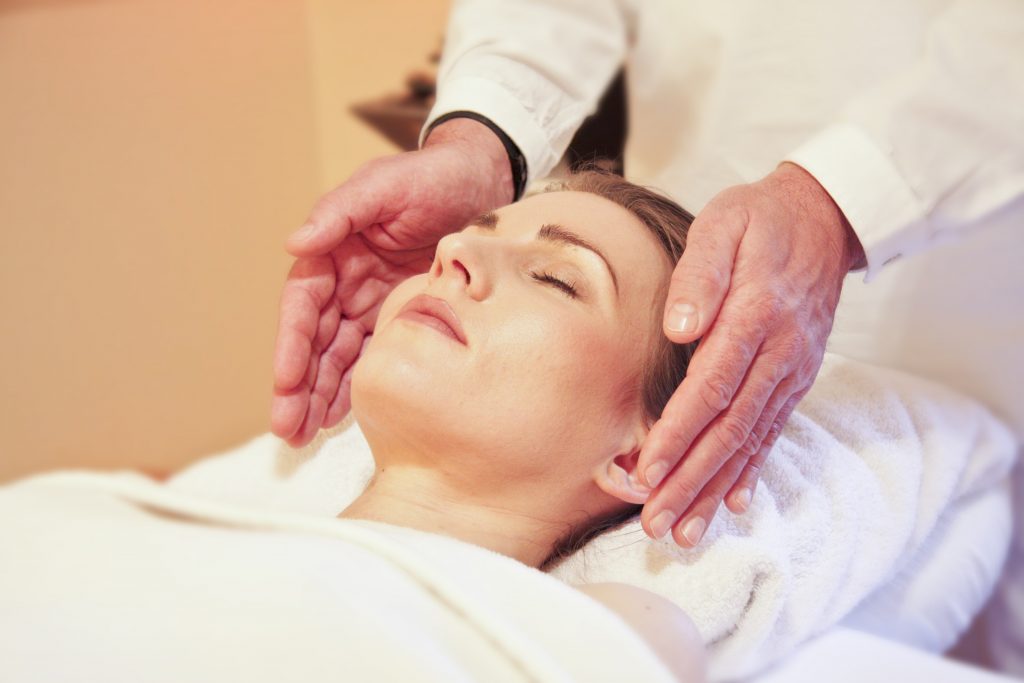
Holistic medicine is also a way of life. And when you approach your life from a holistic health viewpoint, the result tends to produce an experience of wellbeing and wellness. People want to feel highly full of life and enthusiastic and motivated by how good it feels in all areas of our lives. 

And who wouldn’t want to have some extra stamina to keep up with their little ones? We can all use more energy in our lives, that’s for sure!

Yours in the journey,
Hoʻoponopono: how to use this powerful forgiveness prayer to clear your subconscious

From ‘aha’ to ‘what was I thinking’- how this Hawaiian forgiveness prayer can help mothers get their ‘Om’ back.

Hoʻoponopono is an ancient Hawaiian forgiveness and reconciliation process. The term can be translated as “make (a mistake) right.” Traditionally, family members would come together and work out their differences “through prayer, discussion, confession, repentance, and mutual restitution and forgiveness,” according to the Hawaiian Dictionary (Wikipedia, 2020). In fact, ancient Hawaiians believed that the sin of the parents fell on the children. They thought that healing could come only with complete forgiveness of the whole family. [1].

Today, Hoʻoponopono has evolved to be practiced at an individual level. Any wrongdoings imprinted in our subconscious mind (and which even carry over from past lifetimes) can be erased using Hoʻoponopono. The purpose is to remove these wrongdoings and memories to achieve the zero state where there are no memories and identities. Cognitive science would call them negative implicit memories, meaning our actions are influenced by our minds, even those we aren’t aware of.

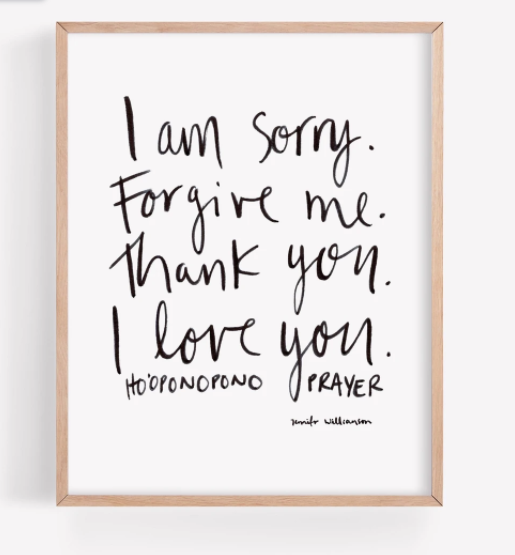
Dr. Ihaleakala Hew Len (who studied Hoʻoponopono under the healing priest Morrnah Simeona), brought forth the idea of Zero State by using a four statement framework. These phrases are:

I’m sorry

Forgive me

I love you

Thank you.

By using the Hoʻoponopono framework, legend has it that Ihaleakala cured every patient at a criminally insane ward of a State hospital without ever meeting with anyone of them in person.

So how can we effectively useHo’oponopono within our roles as mothers? From the get-go, using these four simple phrases can quickly shift our focus of reactivity. Cognitive science has demonstrated that when neurons fire together, they wire together. Any new activity needs to be repeated to become automatic and ‘cemented’ in the brain.

How often have we entered a negative loop of thoughts and emotions due to lack of energy, time, and sleep? We end up lashing out at our loved ones at the slightest provocation. By repeating these four sentences in the moments we are entering the danger zone, we can put a stop button on them. This helps us break the cycle and redirect our attention elsewhere towards something more uplifting (I love you; Thank you).

Any negative situations in our lives are just a reflection of what is not right within us. We are all continually co-creating at the collective level as well as with the Divine. So we must accept total responsibility for everything that happens in our lives as well as in the lives of others. To “make it right,” we then must cleanse and erase.

“If you want to solve a problem, no matter what kind of problem, work on yourself.” —Ihaleakala Hew Len

I have found that repeating these sentences (mostly in my head) helps me better manage my reactions to my children’s outbursts. It allows me to take a step back and consider how I’m contributing to making the situation what it is at that moment. This will enable me to help fix it. It opens a space to show up as a more empathic parent.

We can also start teaching our children these powerful phrases to begin mastering their brains and emotions. And, most importantly, their memories. As children grow and experience more of the world, they start collecting more and more memories. Many can be internalized negatively. But the good news is that minds aren’t fixed and can be changed by a positive aspect. By learning to handle an adverse situation through the Ho’oponopono prayer, we can help our kids alter the label that they put on that experience.

This is, therefore, a great tool to empower both you and your children not only during those early childhood years but also during any time in our lives, no matter how hard or how challenging.

THE PHRASES

I’m sorry– taking full responsibility for everything in our life is what this phrase represents. By being co-creators with one another, we are all responsible for what happens.

Forgive me– it is not necessary to address it to anyone in particular. And most times, we are the ones that need to forgive ourselves the most. This allows us the space to release and let go.

I love you- one of the most potent phrases on the planet. As an emotion, love has one of the highest vibrational frequencies on the earth. Love elevates our spirit and changes our biochemistry almost instantly.

Thank you.- showing gratitude even towards a profoundly upsetting and harmful situation allows us to transcend it so we can go back to Zero state.

_____________________________________

[1] Nana Veary: Change We Must: My Spiritual Journey books.google.com, accessed 19 August 2018 Veary, p. 34

10 Energy Boosting Me-Time Hacks for a Tired Mom

Let’s face it- motherhood is tiring. Scratch that- sometimes it just sucks up all your energy and then some.

Especially during those early childhood years, when you have to be hyper-vigilant of their every move.

Me-time? You ask. When exactly? What exactly? And how?

With dirty dishes in the sink, laundry piling up, toys, and all sorts of clutter scattered throughout the house and little ones that barely sit still, mom exhaustion can genuinely kick in. Who has the time to even think about me-time when they are physically drained and emotionally exhausted?

Spending all day focusing on others is tiring. The effects accumulate after doing it regularly without a break. Me-time allows a tired mom to connect with herself on a deeper level and regain a bit of sense of self. There are multiple benefits associated with carving out some time for ourselves: helps relieve stress, enhances and boosts energy levels, reenergizes the spirit, and improves overall well-being. But most importantly, within the context of being a mother, time by myself should be up there, along with eating and breathing.

Plus, little children feed off their mother’s energy in much the same way they breastfeed. They pick up on our emotional state and reflect it to us. According to a study conducted by the University of Cambridge, “As a social species, humans share emotional states with others. This work shows how emotions change the connection between two individuals at a neural level.” So when you have little ones, the importance of me-time cannot be stressed enough (pun intended).

As the old saying goes, “You cannot pour from an empty cup.”

Here is a list of 10 quick energy-boosting ideas for some well-deserved me-time that will instantly recharge you!

2. Write it down– those endless mental lists of things that run through your head or the pent up emotions that you’re trying to suppress. Journaling is also an excellent way to clear some headspace, which instantly lifts your mood. Bonus tip: writing what’s on your mind at the end of the day also helps your brain switch off to get better sleep.

1. Reading/meditating– You can squeeze in a quick read by waking up 10 minutes earlier or spending the last 10 minutes before bedtime unwinding. (Try limiting the use of electronics at night, so you don’t disrupt your melatonin production).

3. Give thanks– keep a gratitude journal and commit to writing three things you are thankful that day and commit to it for at least 21 days. The nifty idea is to write your three daily things in separate pieces of paper and keep them in a box. When the New Year rolls around, you can take it out and read all the great things that happened to you, making it a wonderful tradition.

4. Eat some dark chocolate– dark chocolate has proven to be a great source of antioxidants and improves blood flow and brain function.

5. Hot or cold showers– Your body and mood will be the best indicator of which one applies depending on the situation, but taking a cold shower or a warm relaxing bath also works wonders on your mind and spirit. The benefits of cold showers are many, like making you more alert and providing a robust immune response in your body. A relaxing warm bath helps you relax and unwind from the stresses of the day. Pro tip: bust out your essential oils kit. Your nose is directly connected to your brain, and scents have immediate effects on your emotions. Just infuse the bathwater with a relaxing smell for added zen.

6. Adult coloring. Especially with little ones around, this is one of those me-time activities you can even do with your little ones. But on your own, it’s also a good source of focused relaxation.

7. Try some quick yoga moves. Sun salutations are an excellent option when you’re pressed for time. In only four minutes, you can increase your energy circulation. You can also do this one with the kiddos- they will love watching you and will want to imitate you!

8. Have a (Zoom) call with a loved one. If social distancing prevents you from meeting in person, connect via chat video. Spending time talking to people we care about decreases our stress levels and automatically boosts our spirits.

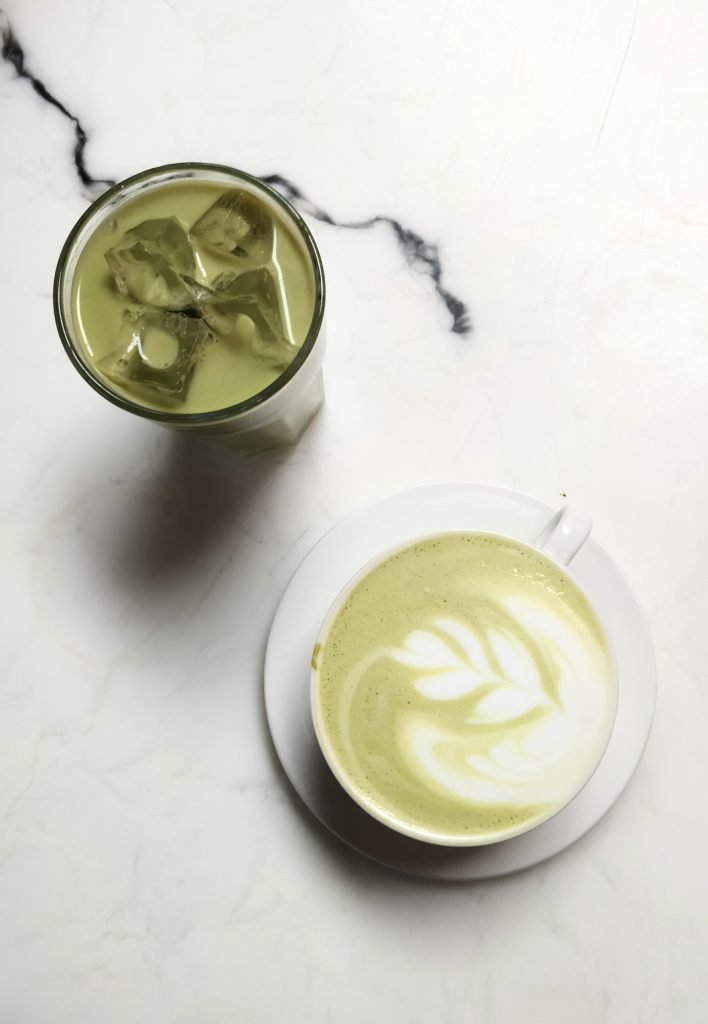
9. Have a small tea ceremony. Take a cue from this ancient Japanese tradition and pour yourself a cup of tea. Pro Tip 1: matcha is a powerful and natural energy booster, so you automatically have a 2-for-1 bonus. Pro Tip 2: you can try this by just filling yourself a glass of water. The trick of this little energy hack is to stay focused and intent on your actions. Bless your tea, water, juice. Infuse it with energy and love (which is one of the highest vibrational emotions) and take mindful sips.

10. If all else fails, breathe! Breathwork is an excellent tool that helps your body change its emotional state in just a few minutes. There are many simple techniques that you can do in a matter of minutes and get the energy boost you need.

There you have it. These quick hacks get you some much-needed me-time throughout the day without requiring a lot of effort (or guilt!). Just remember this simple equation:

Happy Moms = Happy Kids = Happy Spouse = Happy Life.

Children deserve happy moms. Period. We owe it to them. But most importantly, we owe it to ourselves.

With you in the journey-

Iva